After Cleaning
Save dated photographs and note any moss, lichen, or gradual treatment that is expected to continue changing.

Roof care starts with the material, shade, tree cover, drainage, and visible condition. Monitor changes from the ground and choose cleaning or roofing attention based on what your property needs.
The right cleaning interval varies with the roof material, condition, surroundings, and previous treatment.
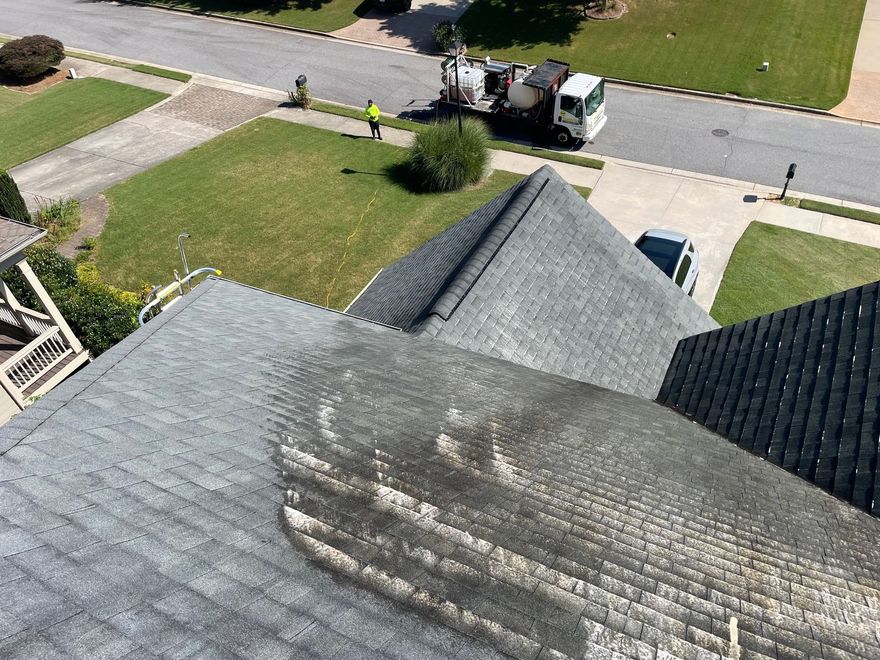 Residential roof example
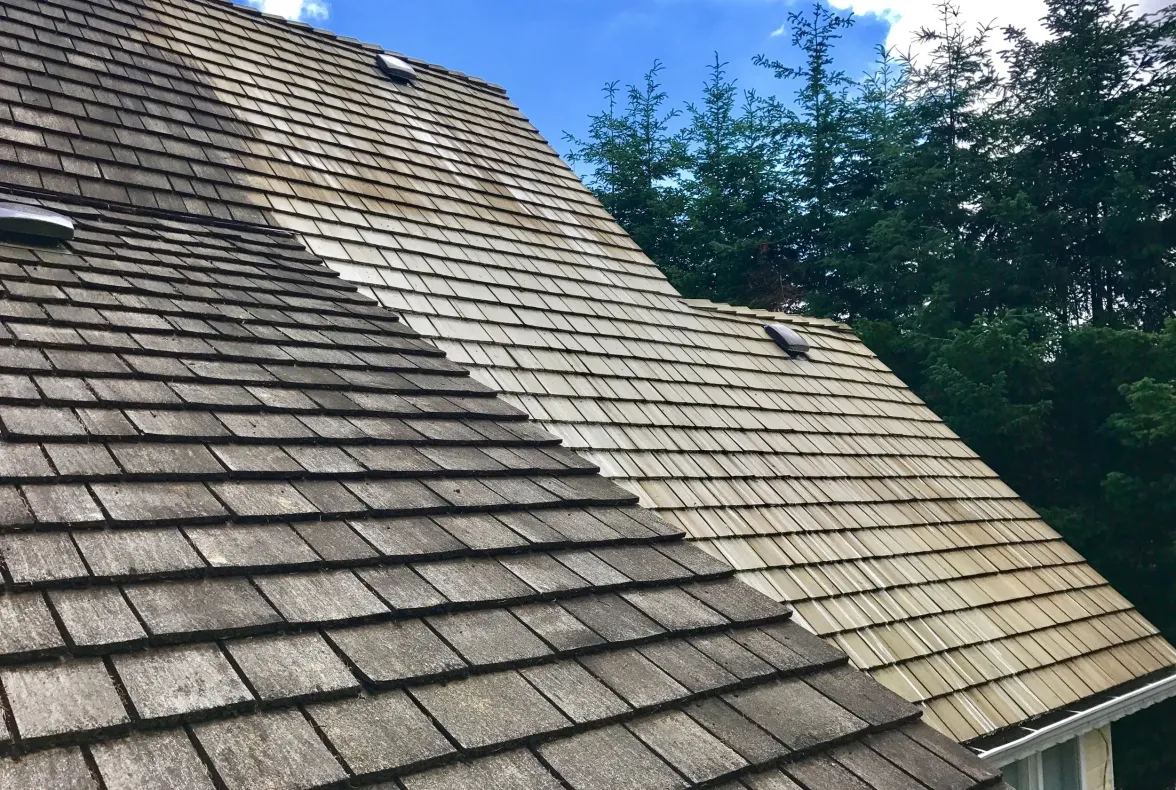 Cedar shake roof near trees
Metro Atlanta’s warm, humid conditions can support algae, moss, lichen, and other organic buildup. Roof sections beneath mature trees or with limited direct sunlight may remain damp longer and show visible changes sooner.
North-facing slopes, valleys, lower roof sections, areas below branches, and surfaces near slow drainage often develop uneven staining before open, sun-exposed areas.
Save dated photographs and note any moss, lichen, or gradual treatment that is expected to continue changing.
Look from safe ground locations for new dark streaks, green growth, debris, or uneven roof sections.
Request a review if new staining or growth appears. The cleaning interval varies by property and should reflect the roof’s current condition.
An HOA notice, insurance concern, listing, appraisal, or inspection may justify an earlier professional review.
Look for dark algae tracks, green patches, crusty lichen, heavy tree debris, or one slope becoming much darker than the others.
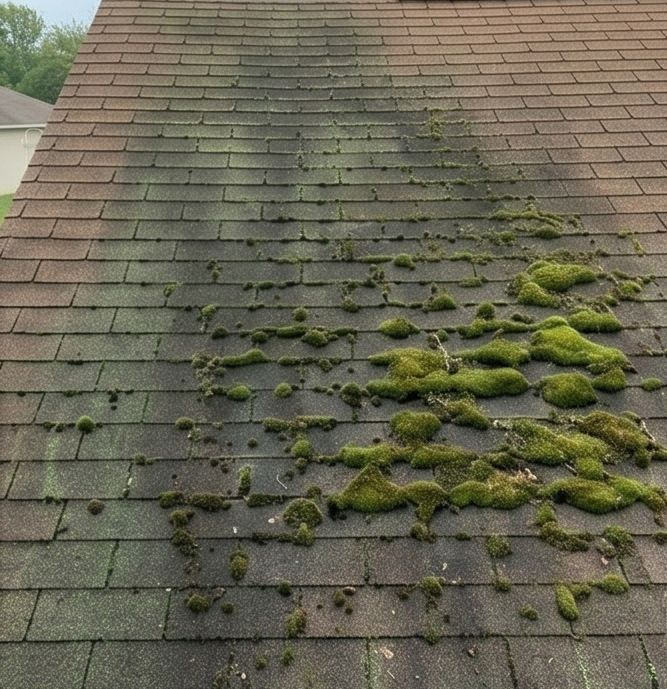 Moss on asphalt shingles
Dark organic buildup may be cleanable. Rust, oxidation, peeling paint, open seams, and loose fasteners are roofing or coating concerns.
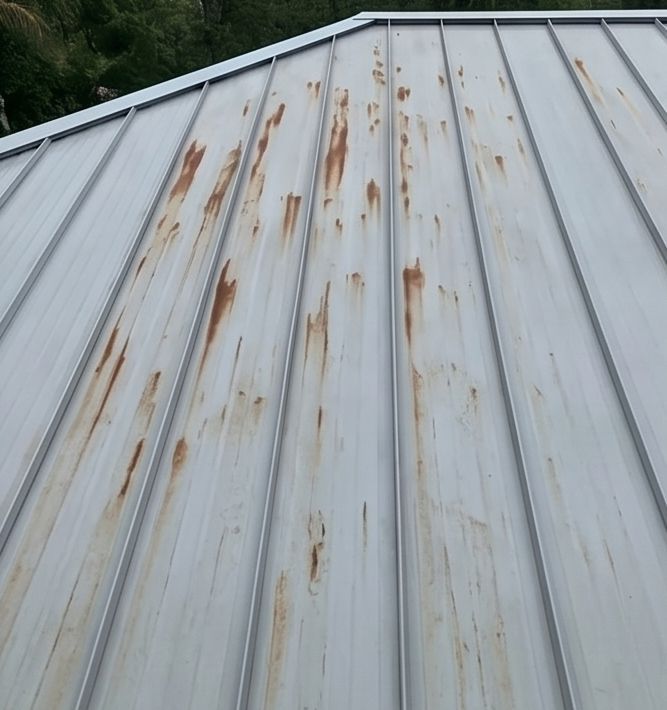 Discoloration on metal roof panels
Moss, lichen, and debris may be cleaning concerns. Cracked slate or tile, loose pieces, deteriorated wood, and failed flashings require roofing review.
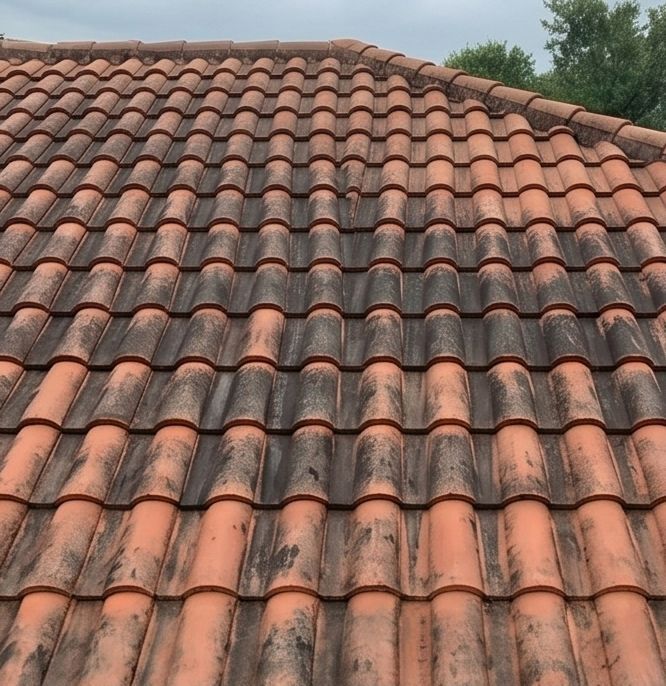 Staining on a tile roof
Use safe viewpoints rather than climbing onto the roof to inspect staining or growth.
Photographs help distinguish gradual change from a condition that appeared suddenly.
Visible branches or concentrated debris may require professional removal and drainage review.
Aggressive water force can damage fragile surfaces and force water beneath roofing materials.
Scraping moss and lichen can damage the surface and is not a safe way to force immediate results.
Leaks, missing materials, rust-through, failed seams, flashing problems, sagging, and structural concerns are not cleaning issues.
Cleaning may be appropriate when the primary concern is visible organic staining or surface debris on a serviceable roof.
A qualified roofer should handle problems with the roofing system itself.
Cleaning and updated photos may document an appearance change but cannot guarantee coverage, renewal, or acceptance.
Confirm the notice, deadline, visible issue, roof material, and whether completion photographs are needed.
Review the roof early enough to match the cleaning method and result timeline to photography, appraisal, inspection, or closing.
Cleaning frequency depends on the roof material, shade, drainage, visible growth, and previous treatment. Request a review when staining or buildup returns rather than relying on a fixed interval.
Annual cleaning is not automatically necessary. Monitor the roof from the ground and ask Peak whether cleaning is appropriate. Any retreatment coverage is subject to the written terms for your service.
No. Aggressive pressure can damage roofing materials and create fall, water-intrusion, landscaping, and chemical-handling risks.
Lichen can remain attached after treatment and release gradually. Timing varies with the roof condition, growth, treatment, and weather.
It is related but separate. Interior gutter and downspout cleaning is an additional service when available.
Cleaning addresses surface dirt and organic growth as part of routine maintenance. It does not repair damage or guarantee a longer roof lifespan.
Call a roofer for leaks, missing or broken materials, failed seams or flashing, structural movement, severe corrosion, or other system damage.
Use current photographs and the property address to review whether the roof needs cleaning now, later, or roofing attention first.