
Commercial Roof Cleaning

Commercial Membrane Roof Cleaning for TPO, PVC & EPDM

Membrane roofs collect airborne dirt, organic growth, loose debris, and residue around drains, equipment, seams, and maintenance routes. Peak builds the cleaning plan around the roof system, facility operations, access, runoff, and closeout requirements.

Commercial cleaning is separate from roof inspection, leak diagnosis, repair, restoration, coating, and warranty administration.

TPO • PVC • EPDM
Facility-Aware Scheduling
Closeout Documentation
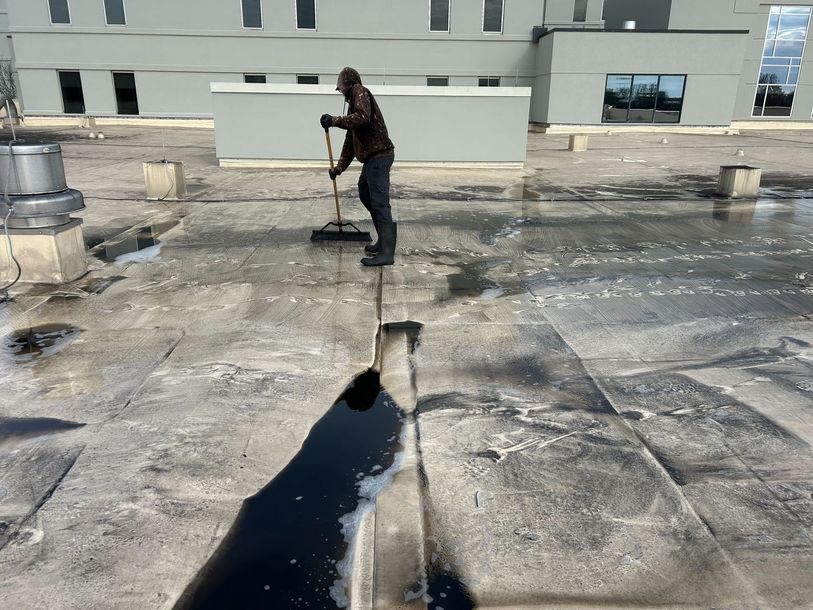
Worker using a long-handled brush on a wet commercial TPO roof TPO roof cleaning in progress
Wet commercial TPO roof surface with seams and rooftop vents visible during cleaning TPO roof surface during cleaning
Why Clean the Roof

Keep Surface Buildup From Obscuring the Membrane

A visibly dirty membrane can make drains, patches, seams, punctures, traffic wear, and other roof details harder for a roofing or maintenance team to review. Cleaning improves surface visibility and removes loose material from active roof areas.

A brighter-looking membrane is not proof that original reflectivity, energy performance, watertightness, warranty status, or remaining roof life has been restored. Those claims require separate data and professional evaluation.

  • Surface dirt and airborne residue
  • Algae and organic buildup
  • Loose leaves and debris
  • Dirty drainage paths
  • Soiled maintenance routes
Systems Within Scope

Cleaning Plans for TPO, PVC, and EPDM Roofs

The membrane type, age, condition, repairs, seams, manufacturer guidance, and facility constraints all influence the cleaning process.

Thermoplastic Membrane

TPO Roof Cleaning

TPO commonly shows dirt, biological growth, roof traffic, and residue around drainage paths and equipment. The plan should account for seams, patches, accessories, and current membrane condition.

  • Controlled surface cleaning
  • Drain and equipment-area planning
  • No promise of restored reflectivity
  • Roof repairs remain separate
Worker brushing a commercial TPO membrane roof near rooftop vents TPO roof cleaning project
Welded Membrane System

PVC Roof Cleaning

PVC cleaning should follow the system, finish, condition, and manufacturer guidance. Test areas and facility-specific runoff planning may be appropriate.

  • System-specific product selection
  • Low-pressure cleaning
  • Detail work around seams and penetrations
  • Qualified result expectations
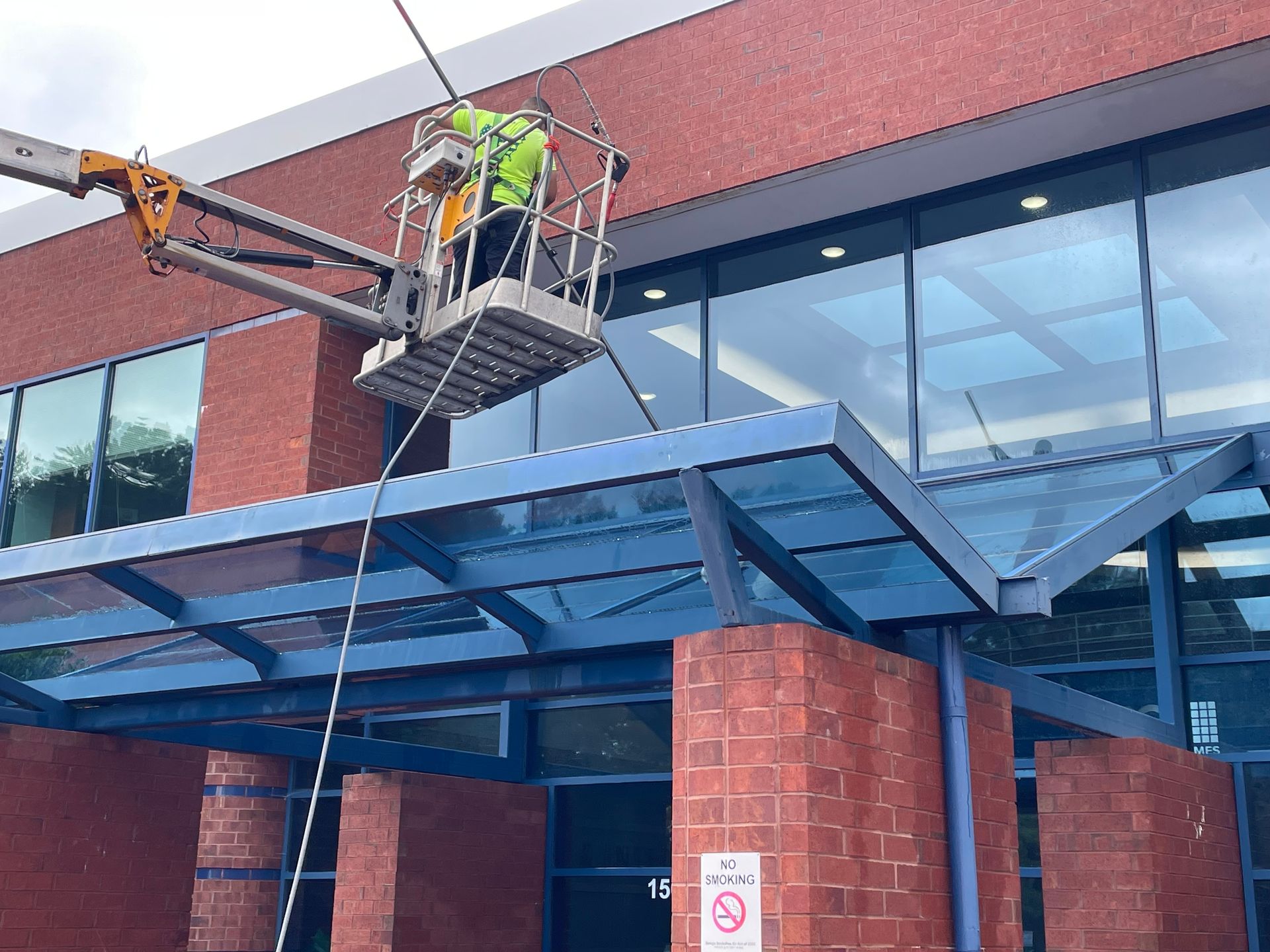
Worker in a boom lift beside the brick exterior of a commercial building Commercial access example
Rubber Membrane

EPDM Roof Cleaning

EPDM requires a membrane-appropriate approach that accounts for its surface, seams, patches, coatings, and the roof’s current condition.

  • Membrane-compatible cleaning plan
  • Loose debris removal
  • Care around patches and details
  • No coating or restoration claims
Boom lift and worker alongside a commercial building Commercial access example
Common Problem Areas

Where Dirt and Debris Collect

01

Roof Drains

Loose material and surface residue often collect along drainage paths and around drain bodies.

02

Rooftop Equipment

HVAC units, screens, curbs, piping, and supports create detailed cleaning and runoff areas.

03

Slow-Drying Areas

Shaded or poorly draining sections can show heavier organic buildup.

04

Seams and Patches

Cleaning may improve visibility but does not repair or certify seams, patches, or penetrations.

05

Maintenance Routes

Traffic areas collect dirt and require scheduling around facility personnel and roof access.

06

Perimeter and Flashing Areas

Edges, transitions, and details require controlled work without treating cleaning as roofing service.

Commercial Project Flow

How Commercial Membrane Cleaning Works

1

Commercial Roof Assessment

Review the membrane, buildup, access, drains, equipment, facility operations, fall-protection needs, runoff, and closeout requirements.

2

Loose Debris Removal

Remove accessible branches, trash, leaves, and loose material so the cleaning process can reach the membrane.

3

Membrane-Appropriate Treatment

Use a controlled cleaning method selected for the membrane system, condition, product guidance, and project scope.

4

Final Rinse and Walkthrough

Complete the planned rinse, review cleaned areas, and keep observations separate from a formal roofing inspection.

5

Closeout Documentation

Provide the agreed photographs, completed-area records, or project notes included in the written scope.

Project timing depends on total area, roof access, membrane condition, equipment, drainage layout, facility operations, weather, and documentation requirements.
Clear Scope Boundaries

Cleaning Is Not the Same as Repairing the Membrane

Cleaning May Improve

Surface Appearance and Visibility

Cleaning can remove visible surface buildup and make roof details easier for the appropriate professional to see.

  • Cleaner visible membrane
  • Clearer drainage paths
  • More visible seams and patches
  • Cleaner maintenance routes
  • Improved photographic documentation
Roofing Evaluation

Damage, Drainage, and Performance

These issues require a roofing, engineering, warranty, or facility professional.

  • Punctures and cuts
  • Open or failed seams
  • Failed patches or flashing
  • Chronic ponding
  • Leaks or hidden moisture
  • Deteriorated membrane
Facility Planning

Commercial Cleaning Has to Work Around the Property

01

Access and Security

Coordinate gates, roof hatches, escorts, credentials, and restricted areas.

02

Tenant Operations

Plan around deliveries, occupied areas, entrances, parking, and business hours.

03

Rooftop Equipment

Account for active HVAC equipment, screens, solar, piping, and maintenance zones.

04

Runoff Management

Identify drains, discharge points, sensitive ground areas, and site-specific containment needs.

05

Safety Requirements

Confirm access, fall protection, building rules, and required site documentation.

06

Closeout Standards

Define photographs, building sections, walkthroughs, and documentation before work begins.

Commercial Membrane FAQs

What Facility Teams Need to Know

What commercial membrane systems do you clean?

Peak develops cleaning scopes for TPO, PVC, and EPDM roofs, subject to the membrane condition, access, manufacturer guidance, and project requirements.

Do you use high pressure on membrane roofs?

The cleaning method and rinse pressure are controlled for the membrane system and condition. Peak does not use a generic high-pressure roof-washing approach.

Can cleaning restore the original reflectivity?

A cleaner white membrane may look brighter, but cleaning does not prove that original reflectivity or energy performance has been fully restored.

Will cleaning extend the life of the membrane?

Peak does not promise a specific life extension. Cleaning supports surface maintenance and visibility but cannot correct deterioration, damage, design, drainage, or installation problems.

Does cleaning prevent roof leaks?

No. Cleaning does not seal punctures, seams, flashing, patches, or penetrations and is not a leak-prevention guarantee.

Does the service include a roof inspection?

No. Peak performs a cleaning assessment and visible condition review for the service scope. A roofing contractor should perform any formal condition or warranty inspection.

Can you work around rooftop HVAC equipment?

Often, yes. Equipment, screens, controls, service clearances, and operating conditions are reviewed during project planning.

Do you provide before-and-after photographs?

Photographs can be included when they are defined in the written scope. Confirm the exact closeout requirement before scheduling.

Build the Plan Around the Roof, Facility, and Maintenance Goals

Send the property address, number of buildings, approximate roof area, membrane type, access information, operating constraints, desired timing, and documentation requirements.

Request a Commercial Assessment